
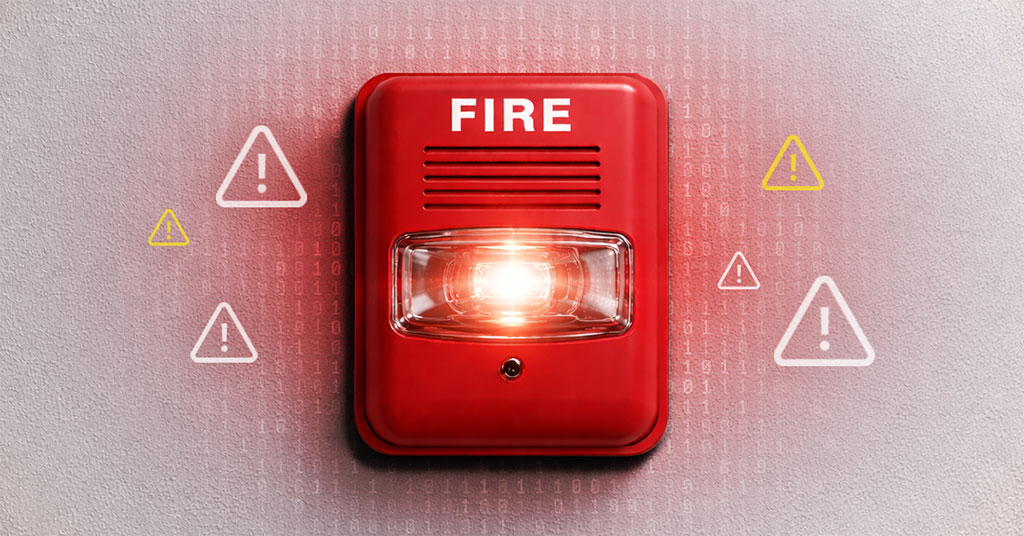
Taking a reactive approach to IT is one of the fastest ways small issues turn into major disruptions, especially during the summer.
Most IT problems do not start as emergencies. A system slows down slightly. A warning message pops up. Something feels off but still works. Because nothing is fully broken, it gets pushed aside in favour of more immediate priorities.
Work continues. Everything seems fine.
But small IT issues rarely stay small. When they finally surface, they almost never appear one at a time.
That is how a normal workday turns into a fire drill. And in the summer, those fire drills are harder to manage.
With vacations, lighter staffing, and less predictable schedules, even routine IT support issues take longer to diagnose and resolve. What could have been handled quietly in the background becomes a disruption that affects your entire team.
Here are a few of the most common scenarios we see with small businesses across Vancouver.
- The “it’s just a little slow” system
It usually starts with a system that feels slightly slower than it should.
Nothing is completely broken, so no one reports it. People adapt by waiting a few extra seconds, refreshing their screen, or trying again. Over time, the slowdown becomes part of the routine.
Until one day, it stops working altogether.
Now your team cannot access critical systems and work begins to stall. People start troubleshooting on their own, restarting devices, guessing at the problem, or creating temporary workarounds.
If the person who usually handles IT support is unavailable, resolution takes even longer.
What could have been a quick fix with proactive managed IT services turns into downtime that affects the entire business.
- The update that keeps getting postponed
There is always an update that needs to be done.
And there is never a perfect time. There is a deadline to hit, a project in progress, or something else that feels more urgent. The update gets pushed to next week and then pushed again.
Because everything appears to be working, it does not feel risky.
Eventually something changes. A system becomes incompatible. A known issue escalates. A cybersecurity vulnerability is left exposed long enough to matter.
Now a critical tool does not work as expected or stops working entirely.
Instead of a planned update, your team is dealing with an unplanned disruption. During the summer, when fewer people are available, that disruption takes longer to resolve and has a bigger impact on productivity.
- The untested backup
Backups run quietly in the background, which makes them easy to forget about.
Maybe there was a warning message or a notification that did not seem urgent. Since nothing failed at the time, it was easy to assume everything was fine.
That assumption holds until data actually needs to be restored.
When a file is lost or a system fails, backups suddenly matter a lot. That is when you find out whether they are working properly.
If backups are incomplete, failing, or have not been tested, recovery becomes slower and more complicated than expected. What should have been a quick restore turns into a larger disruption with your team waiting to get back to work.
How proactive IT prevents summer fire drills
The difference is not luck. It is approach.
Proactive IT support focuses on identifying and resolving issues before they impact your team. Performance problems are addressed early. Updates are handled on a consistent schedule. Backups are monitored and tested so they work when needed.
This approach does not eliminate every issue, but it prevents small problems from turning into business wide disruptions.
What to do before the next issue becomes urgent
If you have a few IT issues sitting quietly in the background, you are not alone.
The problem is that those issues usually surface at the worst possible time, especially during the summer when teams are already stretched thin.
That is where Comwell Systems Group comes in.
As your Vancouver based managed IT services provider, we help ensure small issues do not become major problems by:
- Monitoring your systems so issues are caught early
• Managing updates and maintenance on a consistent schedule
• Making sure your backups work when you need them
• Giving your team a clear and fast way to get IT support
Instead of pushing things off and hoping they hold, you know they are handled.
Let’s take a look at what has been sitting on your list and make sure it does not turn into your next fire drill. Call us at 604-303-8600 or book a quick discovery call.
And if this sounds like something someone you know is dealing with, send this their way. They may be closer to a fire drill than they think.