
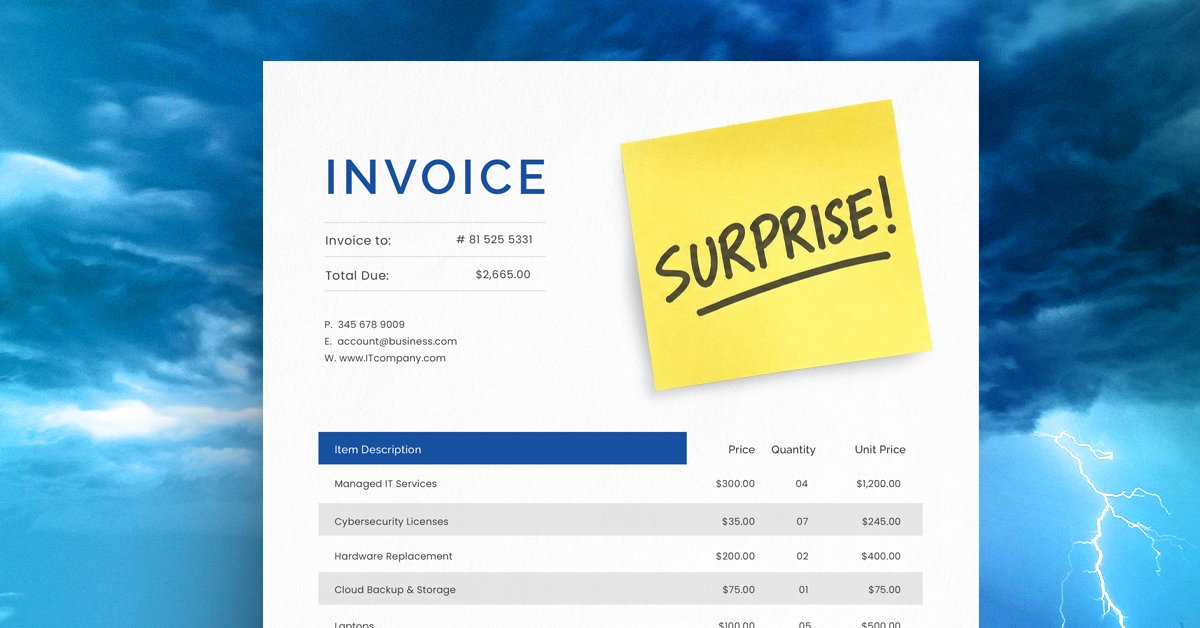
If you're a business owner in Vancouver, your IT budget should help you avoid surprises, not create them.
Every January, technology budgets look neat and predictable. Hardware purchases are approved, software subscriptions are accounted for, and everything appears to be under control. Then summer arrives.
A few laptops fail unexpectedly. New employees increase cloud storage costs. Software renewals cost more than anticipated. Before long, you're looking at an invoice and asking the dreaded question: "Why didn't we see this coming?"
The reality is that most surprise IT expenses are not actually surprises. They are often visible months in advance but get overlooked during the planning process.
Here are four common IT budgeting mistakes that can catch Vancouver businesses off guard.
- Building Your IT Budget Based Only on Last Year's Spending
One of the most common budgeting mistakes is assuming that next year's technology costs will look exactly like last year's.
Historical spending provides a useful starting point, but it is not a forecast.
Your business changes constantly. Employees join and leave. Software vendors raise prices. Equipment ages. Business goals evolve.
When creating an IT budget, look beyond past expenses and evaluate:
- Upcoming hardware replacements
- Software and licensing renewals
- Planned hiring
- Security upgrades
- Business growth initiatives
A strong IT budget focuses on where your business is headed, not simply where it has been.
- "It Still Works" Is Your Hardware Strategy
Most offices have at least one computer that everyone knows is living on borrowed time.
It's slow. The battery barely lasts. Applications freeze unexpectedly. Employees know exactly how to work around its limitations because they've been doing it for months.
The problem is that "it still works" is not a technology strategy.
When aging equipment finally fails, businesses are forced into emergency purchases. Rush replacements are often more expensive and far more disruptive than planned upgrades.
A proactive replacement schedule helps spread costs over time while minimizing downtime and productivity losses.
Good managed IT services providers monitor device age and performance so businesses can plan replacements before equipment becomes a problem.
- Treating Software Renewals Like Autopilot
Automatic renewals are convenient, but they can quietly inflate your IT costs.
Many organizations continue paying for software licenses, cloud storage accounts, and subscriptions that no longer provide real value. In some cases, businesses are still paying for accounts that belonged to employees who left years ago.
Before any renewal date arrives, ask:
- Who is actively using this service?
- Does the business still need it?
- Are there more cost effective alternatives?
- Has pricing changed since the last renewal?
A simple quarterly review of software and cloud subscriptions can uncover significant savings while keeping your IT budget accurate.
- Your Business Growth Plan and IT Plan Don't Align
Many organizations plan business growth and technology spending separately.
Leadership teams discuss expansion, hiring goals, or operational changes. Later, IT planning happens in a separate conversation.
The problem is that growth always creates technology requirements.
New employees need devices and licenses. Remote and hybrid work arrangements require secure access tools. Expanding operations often means additional cybersecurity protections and infrastructure investments.
If IT planning is disconnected from business planning, the costs usually appear later when budgets are already finalized.
When technology planning and business planning happen together, companies gain a far more accurate picture of future expenses and can make smarter financial decisions.
A Good IT Budget Shouldn't Have Surprises
No budget can predict every unexpected event. However, businesses that regularly review hardware lifecycles, software renewals, cybersecurity requirements, and growth plans dramatically reduce costly surprises. The goal isn't perfection. The goal is creating an IT budget that reflects reality and supports your business objectives throughout the year.
For Vancouver businesses, proactive planning combined with professional IT support can make the difference between staying ahead of technology costs and constantly reacting to them.
What's Hiding in Your IT Forecast?
If you're unsure whether your technology budget accurately reflects the year ahead, now is the perfect time to review it.
A quick conversation can often uncover aging equipment, upcoming renewals, security gaps, and growth related expenses before they impact your budget.
Schedule a discovery call with Comwell Systems Group to identify potential technology costs before they become unexpected expenses.
Call us today or visit our website to learn how our managed IT services, IT support, and cybersecurity solutions help Vancouver businesses plan with confidence.
Frequently Asked Questions
Why do IT budgets often exceed expectations?
Most budget overruns occur because businesses fail to account for hardware replacement schedules, software price increases, licensing changes, and business growth initiatives.
How often should businesses review their IT budget?
At minimum, quarterly reviews help identify upcoming expenses, renewal increases, and technology needs before they become budget issues.
What role do managed IT services play in budgeting?
Managed IT services provide visibility into equipment lifecycles, software licensing, cybersecurity needs, and future technology investments, helping businesses build more accurate budgets.
How can businesses reduce surprise technology expenses?
Maintaining an asset inventory, tracking software renewals, planning equipment replacements, and aligning IT strategy with business goals are effective ways to reduce unexpected costs.
Why is proactive IT planning important for Vancouver businesses?
Proactive IT planning helps businesses avoid emergency purchases, minimize downtime, strengthen cybersecurity, and maintain predictable technology spending as they grow.